
When people picture exercise for long life, they usually think of running shoes and heavy weights. The research keeps pointing to a quieter list of moves that may matter just as much. Many crucial exercises are not flashy, do not require a gym, and often get skipped because they look too easy. The truth is that they protect the things that keep you living well: balance, real-world strength, and the ability to do daily tasks for years longer than you might expect.
1. The One-Leg Stand
Standing on a single leg for a short hold looks far too simple to count as exercise, but it sharpens the balance system in a way few other moves do. Activities that challenge balance — including the basic one-leg drill — are recommended specifically because they lower the risk of falls in older adults, and falls are one of the bigger threats to staying independent later in life (source).
To slip it into your day, place a hand on a counter or sturdy chair for safety, lift one foot, and hold for as long as you can comfortably manage before switching sides. Try a few rounds a few times a week. The goal is steady improvement, not one heroic hold, and most people see real gains within a few weeks.
2. Heel-to-Toe Walking
This drill, in which you walk forward placing the heel of one foot directly ahead of the toes of the other, is a staple of physical-therapy clinics for a reason. It forces the body to stabilize through a narrow base and works the small muscles around the ankles and hips. Health agencies list this move on the short menu of balance exercises that help guard against falls and the injuries that come with them (source).
You only need about 10 steps to start. A hallway works great, and a wall close by gives you something to brush with a hand if you wobble. Most people improve quickly within a week or two, which is part of why this drill is so worth the few minutes it takes to do.
3. The Sit-to-Stand
Standing up out of a chair with no help from the arms looks like nothing, but it works the same muscles that decide whether you can get off the floor, in and out of a car, or up from a low couch in your 80s. The exercise trains the hips, thighs, and core all at once, and it lands on expert lists of balance and everyday-function drills that support healthy aging (source).
Start in a sturdy, armless chair, plant your feet about hip-width apart, lean slightly forward, and rise using only your legs. Lower yourself back down with control. Eight to twelve reps a few times a week is a useful starting target, and you can build up steadily from there (source).
4. Tai Chi
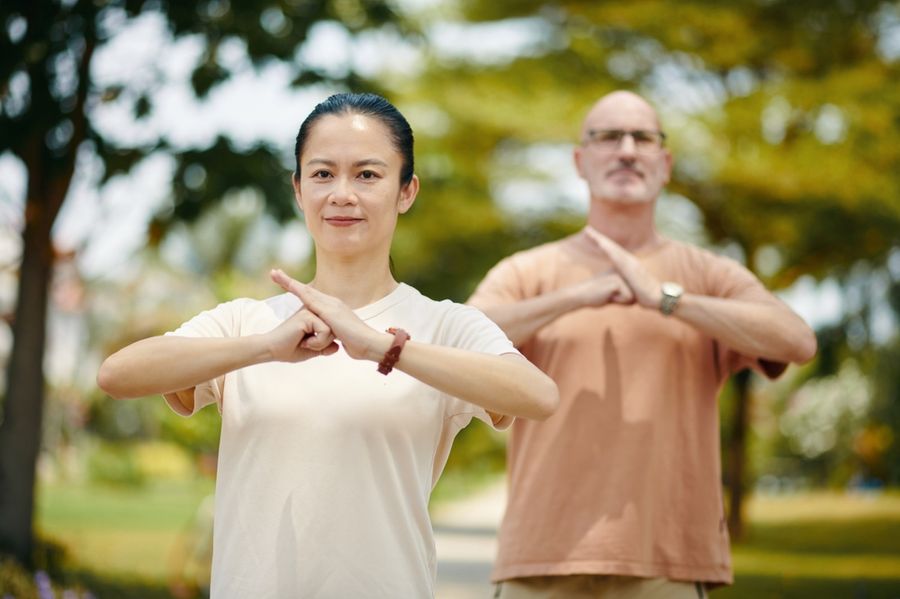
Tai chi looks more like a slow dance than a workout, which is part of why it gets overlooked. It involves shifting your weight gently and precisely from one foot to the other while breathing deeply, and it sits on the official short list of balance practices that lower fall risk in older adults (source).
The advantage of tai chi is that it bundles balance, light strength, and gentle aerobic effort into a single quiet session. Group classes are common at recreation centers and many senior facilities, and short follow-along videos at home work just as well for someone getting started.
5. Chair Squats and Wall Push-Ups
Many people picture strength training as a barbell on the floor of a loud gym, but bodyweight versions of these two moves give similar benefits at much lower stakes. Health experts specifically point to chair squats and wall push-ups as practical entry points that hit the body's main muscle groups without any equipment (source).
A doable target is somewhere between 8 and 12 reps of each move, two or three days a week, with a rest day in between so the muscles can recover. The payoff is more than aesthetic: a steady strength habit has been tied to a longer life, and the benefit stacks when you also keep up aerobic activity each week.
6. Yard Work and Gardening
It may not sound like a "real" workout, but raking leaves, pushing a lawnmower, digging in a flower bed, and hauling bags of mulch all show up on official lists of activities that build endurance and strength at the same time (source). Vigorous housework gets the same nod.
The reason these chores matter is that they keep the body moving in varied ways over long stretches of time. They raise the heart rate, recruit big muscles, and often improve balance as you bend, twist, and step over uneven ground. They are also the kind of activity people will actually do every week, which is the trait that matters most for any habit aimed at longevity.
A Quiet Plan for a Longer Life
You do not need a beach-body program to add years of healthy living. Sprinkling these six moves into a normal week, alongside regular walking, lines up with the activity pattern researchers consistently tie to a longer, more independent life (source). A large analysis of nearly 100,000 adults in their late 50s to early 70s found that pairing strength work with regular aerobic effort was linked to a 41% to 47% drop in death rates over the study window, measured against adults who did not exercise at all (source).
Pick one move from the list and start this week. Add a second next week, and a third the week after. None of them ask for fancy gear or hours of free time, and that simplicity is the point. The habits most likely to keep you on your feet, sharp, and active twenty years from now are the easy ones you will actually keep doing.