

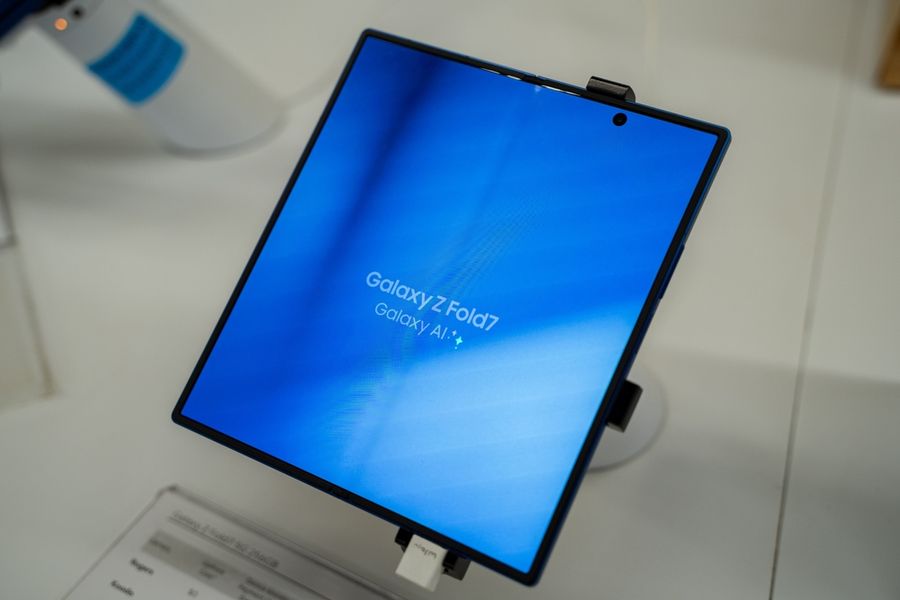
Foldable phones used to be a curiosity, the kind of gadget people stopped to look at in a store but never actually bought. That is starting to change. In 2026, foldables are stepping out of the spotlight and into more pockets, with new shapes, new brands, and bigger screens than ever before. Understand where the foldable phone market stands, what the major players are doing, and where the whole trend seems to be headed.
A Market Finally Picking Up Speed
After years of slow growth, foldable phones are starting to gain real momentum. Global shipments are forecast to grow 10% year over year in 2025, reaching about 20.6 million units (source). The third quarter of 2025 hit an all-time quarterly high, with shipments up 14% from the same period a year earlier, lifted mostly by Samsung's Galaxy Z Fold7 series (source). That was the strongest stretch the category had ever seen.
The bigger story is what comes next. The market is expected to grow 30% in 2026, well above prior forecasts and far faster than the broader smartphone market (source). Foldables are also predicted to grow at an average yearly rate of 17% through 2029, compared with less than 1% for traditional smartphones (source). By 2029, foldables are projected to make up over 10% of the total smartphone market value (source). In short, the category that used to feel like an experiment is becoming a real engine of value for the industry.
Samsung's Bet on the Tri-Fold
Samsung kicked off the year by bringing its first three-panel foldable to the United States. The Galaxy Z TriFold went on sale at Samsung Experience Stores and Samsung.com on January 30, 2026, with a starting price of $2,899 for the 512GB Crafted Black version (source). Unfolding twice, its display reveals a 10-inch screen—the largest screen ever on a Galaxy phone.
The device is also surprisingly thin and tough. With the TriFold measuring just 3.9 mm at its thinnest point, the main display is rated for a 200,000-cycle folding test—which is about 100 folds per day for five years (source). Samsung built it on a customized Snapdragon 8 Elite Mobile Platform for Galaxy, paired with a 200 MP camera and Galaxy AI features like Photo Assist, Generative Edit, and Sketch to Image. A titanium hinge holds the double-folding display together, and every unit gets a CT scan of its circuit board to verify the design.
Apple Joins the Party
The biggest news for the year is not just Samsung. Apple is expected to launch its first foldable iPhone at the end of 2026, and the impact on the category is expected to be large. The Apple foldable is projected to capture over 22% of foldable unit shipments and a striking 34% of the category's total market value in its first year alone (source).
Apple's entry is also expected to come with a premium price tag. Industry forecasts point to an average price around $2,400 for the foldable iPhone (source). Across all brands, foldable phones are expected to sell for about three times as much as a standard smartphone (source). That is steep, but Apple has a long track record of pulling new categories into the mainstream — from smartwatches to wireless earbuds — and the same effect is widely expected once a foldable iPhone is sitting on store shelves alongside the regular models.
New Designs and More Players
Samsung and Apple are not the only names worth watching. Huawei has continued to push its foldables in China and other markets, and its shipments are expected to almost double in 2026 thanks to its HarmonyOS Next platform (source). Other brands are exploring fresh shapes too, from books that fold sideways to tri-folds that act more like tablets when fully opened.
This wider mix of designs is making foldables more useful for everyday tasks. Larger inner screens are great for reading, video calls, side-by-side multitasking, and gaming. New AI features, like real-time helpers that can see what is on screen and image-editing tools built right into the system, take advantage of all that extra space (source). The result is a phone that feels less like a fancy gadget and more like a portable workstation that happens to fit in a pocket when folded closed.
The Bottom Line on Foldables in 2026
After years of slow starts, foldable phones are finally hitting their stride. The category is set to grow 30% in 2026, Samsung has its boldest device yet on the market with the Galaxy Z TriFold, and Apple's first foldable iPhone is expected later in the year (source). Foldables are also expected to make up more than 10% of total smartphone market value by 2029, a much larger slice than just a few years ago (source).
For most U.S. buyers, foldables are still a premium choice rather than a default pick. Prices remain high, and not every app or daily use case truly needs that extra screen real estate. But the shapes, software, and player list are all moving in the same direction at once. By the end of 2026, the question may not be whether foldables can compete with regular phones, but whether regular phones will start to feel a bit old standing next to them.