
If you spend your workday glued to a chair, your body keeps the score. Sitting for hours in one spot quietly tightens the neck, shoulders, hips, and lower back, and many people pay for it with afternoon stiffness or a dull headache. The good news is that a handful of short stretches at your desk can ease that buildup, and you do not need any special gear to do them.
1. Gentle Neck Releases You Can Do Anywhere
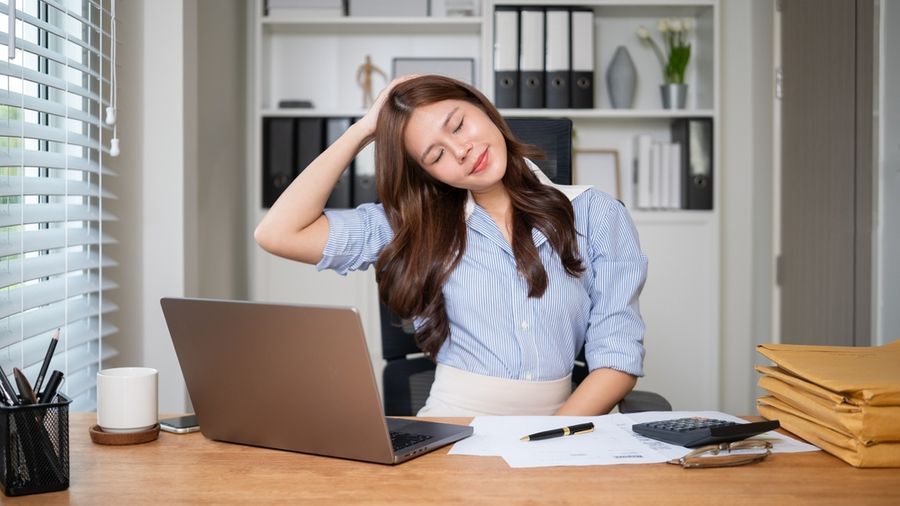
Hours of looking at a screen can leave the neck feeling tight and sore, since long stretches of sitting put extra stress on the upper back and shoulder muscles (source). A few small head movements at your desk can quietly undo some of that strain. The whole sequence takes about a minute, and no one around you will even notice.
Start by dropping your chin slowly toward your chest until you feel a mild stretch along the back of the neck, and stay there for roughly 15 to 30 seconds (source). From the same starting position, turn your head to look left and pause for the same count, then look right and pause again. Finish by tilting one ear toward the matching shoulder, holding briefly, and then doing the other side. Move slowly, breathe naturally, and never push through a sharp pinch.
2. Side-Neck Stretch with a Chair Anchor
The muscles running from the base of the skull down into the shoulders can get especially tight if you hunch over a laptop. A simple seated stretch that uses the chair itself as an anchor pulls those fibers in a deeper, more satisfying way. It is a nice follow-up to the first routine.
Sit up tall with both feet resting on the ground and your shoulders relaxed away from your ears (source). Reach under the seat with one hand and gently grip the bottom of the chair, which keeps that shoulder pulled down and out of the way. Slowly drop the free ear toward the matching shoulder until a comfortable pull shows up along the side of the neck, hold for several breaths, and then switch hands and sides. Stop short of any sharp feeling.
3. Wrist and Forearm Stretches for Tired Hands
Typing and mouse work all day can wear out the small muscles in the forearms, which in turn pulls on the wrists. Two short stretches done a few times a day can help keep both areas feeling loose. They also pair nicely with a quick screen break.
Extend one arm in front of you at about shoulder height with the palm facing the floor. Bend the hand toward the ground, then use the other hand to apply a light pull toward your body, and stay in that position for roughly 15 to 30 seconds before changing arms (source). Next, flip the same arm so the palm faces upward and repeat the gentle pull, again holding for the same 15-to-30-second window before changing arms. Stop the moment you feel pinching, especially around the inner wrist.
4. Standing Quad Pull and Standing Twist
Long sitting also shortens the muscles in the front of the thighs and packs tension into the trunk. Standing up and combining a quad stretch with a gentle twist works both of those zones in under two minutes. Use the edge of the desk or the back of a chair for balance.
While standing, bend one knee behind you, reach back, and bring the heel toward your seat using the same-side hand. Stay in the pose for roughly 15 to 30 seconds before changing legs (source). After that, step your feet about hip distance apart, fold your arms across your chest, and rotate your upper body to one side. Hold for around 30 seconds, untwist back to center, and turn the other way for the same count.
5. Seated Single-Knee Hug for Hips and Lower Back
The hips and lower back tend to lock up after long stretches of sitting, and a quick seated stretch can quietly reset that area. The move is small enough to do during a video meeting if your camera is angled at your face. It targets the muscles around the hip and the lower back without forcing you to stand.
Remain seated with both feet on the floor. Lift one knee up toward your chest, take hold of the back of that thigh with both hands, and slowly draw it closer to your body while keeping your spine tall and avoiding any forward lean. Hold for about 30 seconds, lower the leg, and then bring the other knee up for an equal hold (source). If the stretch feels too strong in the knee joint, reposition your hands a little lower on the thigh.
Small Doses, Big Payoff
Stretching at work does not require a long break or a yoga mat. Short workouts and movement bursts that you sprinkle across the day appear to work about as well as a single longer session (short). That makes a stretch routine easy to slip in between calls, after sending an email, or while waiting for a file to load.
A good starting goal is to pause once an hour, run through one of the five routines above, and then return to your task. Over a few weeks you may notice that your shoulders sit lower, your lower back complains less, and your afternoons feel a touch more energized. The point is steady habit, not perfection, so pick the one routine that feels best and grow the practice from there.