

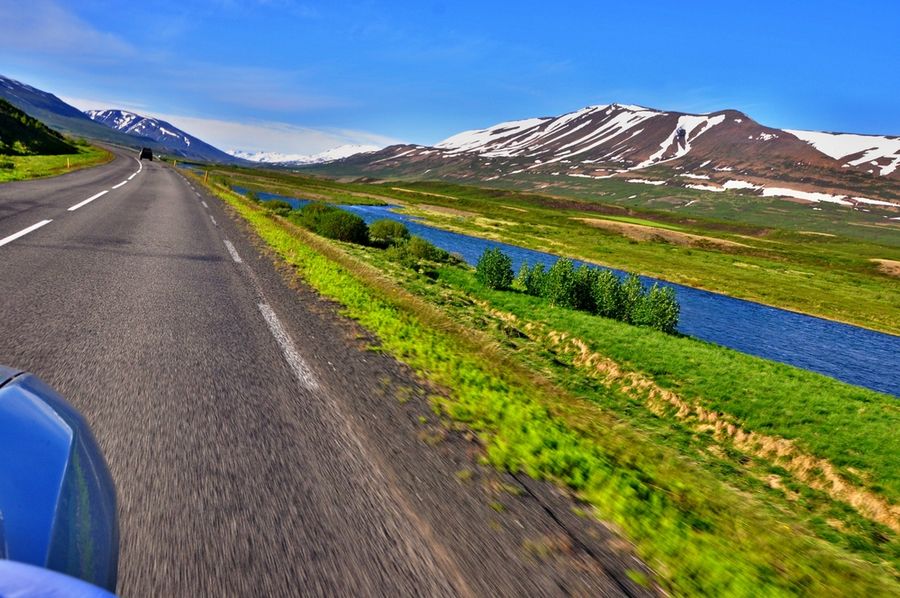
Iceland sits at the edge of the North Atlantic, far enough from the familiar that it feels like stepping into a different world. Most visitors land in Reykjavik, a compact and walkable capital that packs a surprising amount into a small area. From there, one of the most iconic road trips on Earth begins — a loop around the entire island that takes in glaciers, waterfalls, volcanic landscapes, and more. Knowing what to expect can help you enjoy the journey to the fullest.
Landing in Reykjavik
Reykjavik is a small capital city by any measure, but it punches well above its weight when it comes to charm and energy. The streets in the city center are easy to walk, with colorful houses, local coffee shops, and small restaurants tucked around nearly every corner. Even if you only have a day or two before heading out on the road, the city rewards slow walking and easy wandering.
One of the best things about Reykjavik is how compact and simple to navigate it is. Most of the main sights sit within a short walk of each other, making it easy to cover a lot of ground without much effort. The old harbor area is a great place to start, with views across the water toward snow-capped mountains on the far shore. From there, heading uphill through the older neighborhoods gives visitors a real feel for how the city lives and breathes.
A Church That Rises Above the City
The most famous building in Reykjavik is Hallgrímskirkja, a striking church that sits at the very top of the city's main hill. Rising to a height of 74.5 metres (244 feet), it is one of the tallest structures in Iceland, and its design draws directly from the natural landscape—specifically the columnar basalt formations found across the island (source). That volcanic inspiration gives the building a silhouette unlike most churches you will have seen before.
Construction began in 1945, and the church was not fully consecrated until December 1986, making it a project that spanned roughly 41 years from start to finish (source). Visitors today can take a lift to an observation deck near the top of the tower, where the views open up across Reykjavik's rooftops, the surrounding ridgelines, and the Atlantic waters beyond. Standing out front at the base of the tower is the statue of explorer Leif Erikson—a gift to the people of Iceland from the United States, presented in 1930 to mark the 1,000th anniversary of Iceland's parliament (source).
Getting on the Road: Iceland's Ring Road
Once you're ready to leave the city, Iceland's Ring Road—officially known as Route 1—opens up the rest of the island. The road covers a total distance of 1,322 kilometres (821 miles), circling the entire country and connecting every major region from the waterfall-rich south coast to the geothermal north (source). It was completed in 1974, and since then it has served as the backbone of virtually every self-drive trip through Iceland.
The Ring Road is fully paved for its entire length and is open year-round. Many of the country's most celebrated natural sights sit right alongside the route—tall waterfalls, glacier lagoons, black sand beaches, and volcanic craters that give every stretch of road its own character (source). Most first-time visitors plan at least a week for the full loop, though even a few days on a single section will leave a strong impression. The scenery shifts constantly, and there is rarely a dull stretch to drive through.
Jökulsárlón: A Lagoon Full of Ice
Among the most talked-about stops on the Ring Road is Jökulsárlón, a glacial lake set within Vatnajökull National Park in the southeastern part of the country. It holds the distinction of being Iceland's largest and deepest glacial lake, with icebergs floating across its still surface at all times of year. The ice that breaks away from the edge of the nearby glacier and drifts through the lagoon can be over 1,000 years old (source).
As those ice blocks drift toward the ocean, smaller pieces wash ashore on the black sand beach just across the main road—a sight that has made this stretch one of the most photographed in all of Iceland. The lagoon's dramatic scenery has also attracted Hollywood productions, including two James Bond films, "Die Another Day" and "A View to a Kill," both of which used the lagoon as a filming location (source). It is one of those places that looks almost too striking to be real, even when you are standing right at its edge.
Why Iceland Keeps Drawing You Back
Iceland has a way of staying with travelers long after they return home. Reykjavik offers a warm and welcoming starting point—a city that feels both lively and easy to explore at an unhurried pace. The Ring Road then opens up a completely different kind of experience, one where the drive itself becomes part of the adventure.
Whether you spend most of your time in the capital or push further out along the coast into quieter, less-traveled stretches, the combination of city life and wild nature is hard to match anywhere else. For Americans looking for a trip that feels genuinely adventurous but still approachable and well-connected, Iceland delivers on both counts. A first visit almost never ends up being the last.