

For years, adventurous travelers kept returning to the same well-loved spots. But something is shifting. A growing number of younger Americans are starting to look past the usual destinations and fixing their gaze on a vast, open country wedged between Russia and China. Mongolia, with its enormous landscapes, living nomadic culture, and one-of-a-kind festivals, is no longer a secret known only to the most daring explorers. It has quickly become one of the most exciting places on the planet to visit.
A Land Unlike Anything You Have Seen Before
Mongolia is not like most countries you have ever set foot in. The land stretches on in every direction — a mix of wide-open grasslands called steppes, green rolling hills, rugged mountains, and bone-dry deserts. There are no crowds pushing through narrow streets, no long lines at a famous landmark, and in many parts of the country, no towns at all. For travelers who feel like the world has gotten smaller, Mongolia is a reminder that plenty of it is still wild and untouched.
One of the most jaw-dropping places to visit is the Gobi Desert, which covers a massive stretch of southern Mongolia. Inside the Gobi, travelers come across the Khongor Sand Dunes — a dramatic wave of golden sand that runs for more than 100 kilometers and climbs as high as 300 meters in places (source). Locals call them the "singing sands" because of the low, humming sound the wind produces as it rushes across their slopes. Visitors can ride two-humped Bactrian camels along the base of the dunes, hike to the tops for sweeping desert views, or simply sit and watch the colors shift as the sun drops toward the horizon.
The Naadam Festival: Ancient Traditions on Full Display
Each summer, Mongolia hosts one of the most remarkable celebrations in all of Asia. The Naadam Festival is a tradition that stretches back hundreds of years, all the way to the era of Genghis Khan and the great Mongol dynasties. At its heart are three sports — wrestling, archery, and horse racing — which Genghis Khan believed were the essential skills of any Mongol warrior (source). Today, the event is the biggest gathering of the year, drawing competitors and spectators from all over the country.
What makes the festival so memorable for visitors is how fully it pulls you in. The opening ceremony features elaborate costumes, traditional music, and performances that bring centuries of Mongolian history to life. Horse races unfold across open countryside, with young child riders competing over long distances while crowds cheer them on. Wrestlers square off in colorful traditional gear, watched by fans who treat them with the same enthusiasm Americans give professional athletes (source). International travel companies now offer dedicated festival tours that let visitors attend training camps, meet competitors in person, and witness the full spectacle over multiple days.
Life in a Ger: As Real as Travel Gets
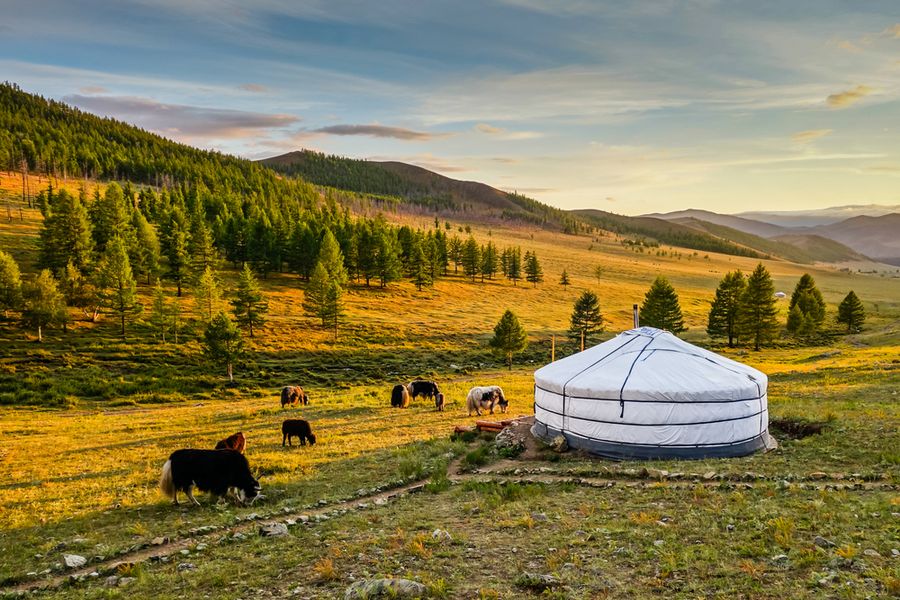
Arguably the experience that sticks with visitors most is the chance to spend a night the way Mongolian nomads have for thousands of years — inside a ger. A ger is a round, portable dwelling made with a wooden frame and layers of felt, built to be warm when temperatures fall and cool when they rise (source). It can be packed up and moved whenever a family follows their herds to fresh grazing land. Staying in one gives travelers a direct connection to a way of life that has barely changed across centuries.
Ger camps set up for tourists give visitors a taste of this lifestyle, with shared facilities and comfortable beds inside traditional felt-covered dwellings. For younger travelers who are tired of manufactured "authentic" experiences, sleeping in a ger — even in a tourist camp setting — offers something most accommodations cannot: a genuine sense of how people have lived on this land for thousands of years, far from city noise and well off the beaten path.
The Numbers Tell the Story
Mongolia is no longer a destination known only to a small circle of dedicated travelers. In 2024, the country welcomed 727,386 international visitors — a rise of 22.5% from the year before (source). By early 2025, that number had already climbed to 808,956, setting a new all-time record (source). Tourism revenue reached $1.6 billion in 2024, up from $1.2 billion the previous year, and the government has set an ambitious goal of attracting two million visitors annually by 2030 (source).
American travelers are increasingly part of this story. More than 22,000 visitors from the United States made the trip in 2024, and new flight connections are expected to push that number even higher (source). The government has also simplified the visa process through an online eVisa system, cleared the way for more infrastructure investment across the country, and is actively marketing Mongolia to Western audiences. For those who want to experience the country before the crowds fully arrive, that window may not stay open forever.
Mongolia's Time Has Come
For a long time, Mongolia was the kind of place that appeared on bucket lists but never quite made it to the top. The distance felt too great, the logistics too uncertain, the path too unmarked. That is changing, and the people who have already made the trip are quick to say they are glad they went when they did.
Mongolia offers what a lot of modern travel promises but rarely delivers: wide-open space, genuine human connection, and experiences that feel nothing like anything you have seen on a screen. The skies are dark enough at night to show the full spread of stars. The steppe stretches far enough to make silence feel like something solid. And the people you meet — whether at a wrestling match or over a bowl of soup in a ger — make it feel less like tourism and more like arriving somewhere that was always waiting to be found.