

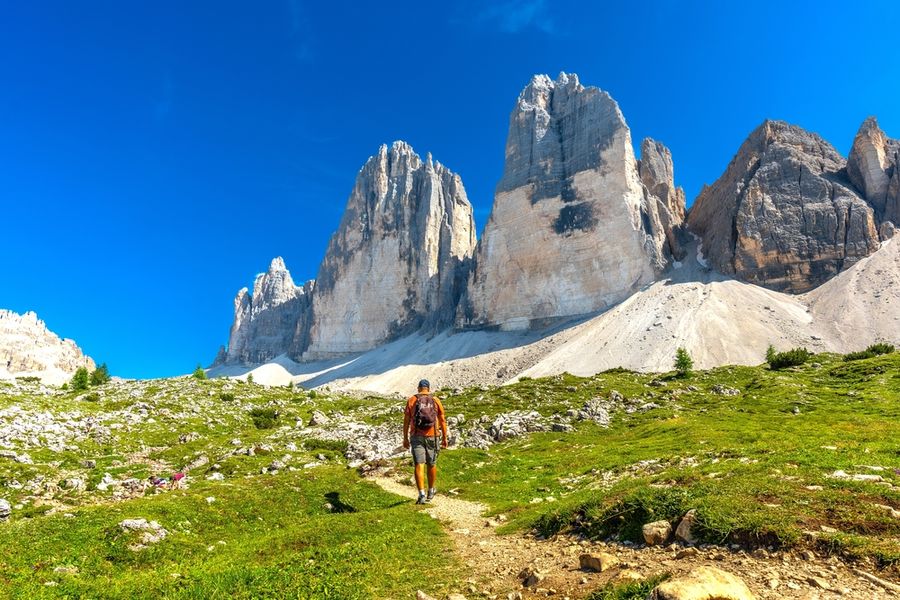
Few mountain ranges in the world stop people in their tracks the way the Dolomites do. Jagged limestone peaks rise from the valleys of northeastern Italy in shapes that look almost too dramatic to be real—pale spires turning orange at sunrise, high meadows stretching wide between the rocks. For first-time visitors, the landscape is far more accessible than it appears, but understanding more about the region will enhance your journey.
A Mountain Range Built for Every Level
The Dolomites sit in northeastern Italy and are recognized as a UNESCO World Heritage region, a designation that speaks to the exceptional quality of the scenery and the importance of protecting it (source). What makes the area stand out for hikers is how well it has been set up to welcome people of different abilities. The trail network covers everything from easy lakeside loops to demanding multi-day treks through high passes, with no single type of hiker in mind.
One of the biggest advantages for first-timers is the cable car and lift system that connects many valleys to the higher terrain above. Rather than spending the first two hours of a hike climbing steep switchbacks just to reach good scenery, visitors can ride a gondola up to altitude and step directly onto trails with sweeping views. This feature makes the Dolomites accessible in a way that many mountain ranges simply are not, and it changes the experience considerably for anyone still building their mountain legs.
How Fit Do You Need to Be?
The honest answer is: not as fit as you might expect. If you can walk comfortably for two to three hours and manage uneven ground without too much trouble, the easier trails here are within reach (source). No previous mountain experience is required. Beginner routes involve gradual climbs on mostly packed dirt and gravel, with some paved sections along the busiest paths.
What matters more than raw fitness is pacing yourself and following the trail markings. The Dolomites use a system of red-and-white painted blazes on rocks and trees, along with numbered signs that show estimated walking times to the next point. On the main trails, navigation is genuinely simple as long as you pay attention. The well-traveled paths also pass regularly through mountain huts, meaning help and a place to rest are rarely more than an hour away in either direction.
Trails Worth Starting With
For a first visit, a few areas stand out as natural starting points. The loop around Tre Cime di Lavaredo is the most famous short hike in the range—8.8 kilometres, with 425 metres of elevation gain spread across the route, and a hiking time that ranges from two and a half to five hours depending on your pace (source). Drivers and shuttle passengers can get close to the starting area, so the walking begins right at the dramatic scenery rather than far below it.
Alpe di Siusi offers a very different kind of introduction. The largest high alpine pasture in Europe, it draws hikers looking for gentle paths through open wildflower fields with sharp peaks rising on all sides. Cable cars from the valley carry visitors up quickly, taking the hard work of the initial ascent off the table. For those who prefer a lakeside walk, the loop around Lago di Braies is easy, well-maintained, and carries no technical difficulty at all.
The Mountain Hut Network
Scattered throughout the hiking areas are rifugios, mountain huts that range from simple shelters to comfortable lodges. Most of them serve hot food and drinks throughout the hiking season, and stopping at one mid-hike for a meal is a completely normal part of the day in the Dolomites. This takes real pressure off the planning, since you do not need to carry a full day's worth of food to enjoy a longer outing.
For those ready to try something more ambitious, the rifugio system also supports multi-day hiking. The Alta Via 1 is one of the most celebrated long-distance routes in the region, stretching around 120 kilometres from Lago di Braies in the north down toward Belluno in the south (source). The full route is not beginner terrain from end to end, but guided options exist, and shorter sections can be walked independently as a first step into overnight hiking.
Timing and the Afternoon Weather Rule
The main hiking season runs from late June through early October. Before late June, snow can still block higher trails. After early October, mountain huts begin closing and conditions grow less predictable. Within that window, June and September tend to be less crowded than the peak summer weeks, giving first-timers more space to move at their own pace without feeling rushed.
Mountain weather in the Dolomites demands real attention. Mornings are typically clear and calm, but afternoon thunderstorms develop regularly through the summer months. The standard practice is to start early—on the trail well before mid-morning—so that you reach your destination while conditions are still good and are already heading back down before the sky changes. Getting caught on an exposed ridge in a lightning storm is not a hypothetical risk, and an early start eliminates most of it.
Your First Steps in the Dolomites
The Dolomites have a way of paying off quickly. The scenery delivers within the first hour on almost any trail, the infrastructure is excellent by any mountain standard, and the variety of options means there is almost always a route that fits where you are physically on any given day.
For Americans visiting for the first time, the practical advice is simple: start easier than you think you need to, get on the trail early in the morning, and build your confidence from there. The mountains are generous to people who approach them with a little patience and a willingness to let the place set its own pace.