

Most people picture the same handful of destinations when they think about national parks — the Grand Canyon, Yellowstone, Yosemite. And for good reason: those places are stunning. But the United States has dozens of other national parks that offer just as much wonder, with far fewer crowds. If you love nature and want a more peaceful experience, some lesser-known parks deserve a spot on your travel list. Each one has something truly special to offer.
1. Congaree National Park — South Carolina
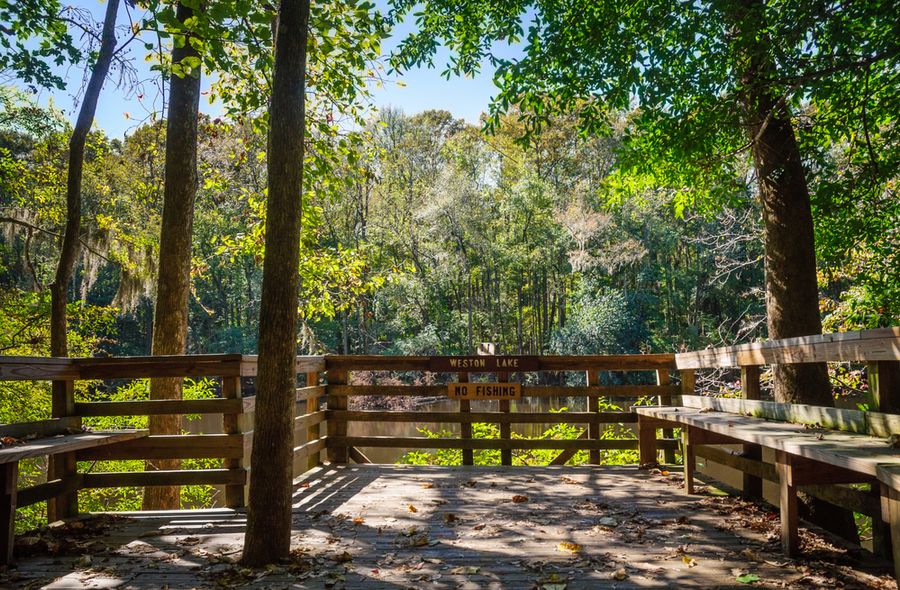
Tucked away in central South Carolina, Congaree National Park is one of the most overlooked parks in the entire country. The park preserves the largest stretch of old-growth bottomland hardwood forest still standing in the United States. The trees here are enormous — some of the tallest in the entire eastern part of the country — forming one of the highest temperate forest canopies left in the world.
Visitors can walk the 2.6-mile Boardwalk Loop, an elevated path that winds through the swampy landscape without disturbing the plant life below (source). The park also has a canoe trail along Cedar Creek, and on summer evenings, firefly displays light up the forest in a way that feels almost magical. Despite all of this, Congaree consistently ranks among the least-visited national parks in the country, which means you can often enjoy it in near-total quiet.
2. Lassen Volcanic National Park — California
If you've ever wanted to see a volcano up close without the crowds of other parks, Lassen Volcanic in northern California is the place to go. What makes this park truly one of a kind is that it contains all four types of volcanoes found anywhere in the world: shield, composite, cinder cone, and plug dome. No other place on earth puts all four types in such close range of one another (source).
The landscape here is alive in a way that's hard to describe. Steam vents, boiling springs, and bubbling mud pots are scattered throughout the park, serving as visible signs that volcanic activity still simmers beneath the surface (source). Hikers, photographers, and science lovers alike will find plenty to explore, and without the massive visitor numbers of parks like Yellowstone, you can take your time and really soak it all in.
3. North Cascades National Park — Washington
North Cascades National Park sits in the mountains of northwestern Washington, and it holds a record that surprises most people: it has more glaciers than any other park in the contiguous United States. With over 300 glaciers spread across the park, this is the most heavily glaciated area in the lower 48 states (source). The scenery — jagged peaks, deep blue ice, and river valleys carved over thousands of years — is unlike anything most Americans have ever seen in person.
Despite its dramatic landscape, North Cascades draws a fraction of the visitors that flock to more famous parks in the region. That means fewer lines, more trail solitude, and a stronger sense that you are truly out in the wilderness. The glaciers are slowly shrinking due to warming temperatures, which makes visiting sooner rather than later all the more worthwhile (source).
4. Pinnacles National Park — California
About 80 miles southeast of San Jose, Pinnacles National Park is a place that tends to catch first-time visitors off guard. The park was shaped by volcanic eruptions that took place around 23 million years ago, leaving behind a dramatic maze of rocky spires, deep canyons, and cave systems (source). The caves here were formed not by water, like most caves, but by rockfall — boulders tumbled and piled on top of each other over time, creating narrow, pitch-black passages that visitors can explore with a flashlight.
Pinnacles is also one of the few places in the world where you can spot California condors in the wild. These birds, which have wingspans of nearly nine and a half feet, were brought back to the park through a reintroduction program that began in 2003 (source). The first nest since that reintroduction was recorded in 2010. Standing on a trail and watching a condor glide overhead is one of those experiences that people remember for the rest of their lives.
5. Big Bend National Park — Texas
Way out in southwest Texas, where the Rio Grande curves into a wide U-shape, Big Bend National Park stretches across more than 800,000 acres of desert, mountains, and river canyon. It is home to more than 450 species of birds — more than virtually any other national park — along with over 60 types of cacti and the entire Chisos mountain range, the only mountain range contained within a single national park (source; source).
Big Bend is also one of the best stargazing spots in the world. The park sits at the heart of the Greater Big Bend International Dark Sky Reserve, a certified area spanning over 15,000 square miles across Texas and Mexico — the largest dark sky certified place on earth (source). On a clear night, the Milky Way is visible with the naked eye, and the sky fills with more stars than most people have ever seen. For those who love both wild landscapes and wild skies, Big Bend is hard to beat.
Start with the Road Less Traveled
The most famous national parks are famous for a reason — but they're no longer secrets. The five parks above offer something rarer: the chance to experience truly remarkable places without the noise and rush of a crowd.
Whether you're drawn to ancient forests, volcanic landscapes, glaciers, soaring condors, or star-filled desert skies, there's a lesser-known park out there that might just become your new favorite. The road less traveled is still waiting.