

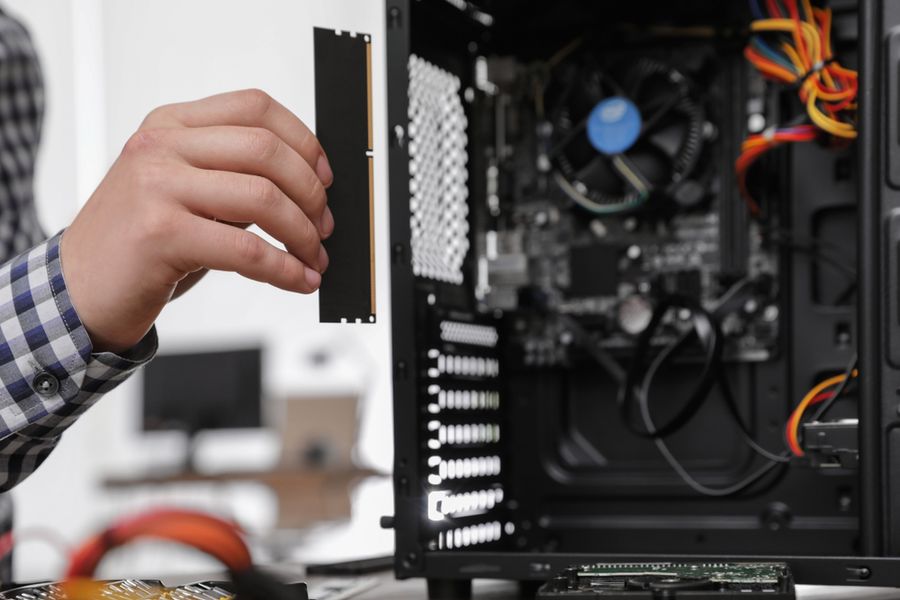
For decades, the desktop PC has been the workhorse of homes and offices across the country. While a prebuilt machine is the easy choice, more people are picking up a screwdriver and putting their own system together. A custom build can match what you actually need, look how you want it to look, and grow with you over time. Understand the case for building your own desktop, one part at a time.
You Decide What Goes Inside
Building your own PC is the route to take if you want a real say in every piece of the system. The level of customization runs all the way from the central processor down to the case fans and the lighting that washes over them (source). That kind of control simply does not exist with most ready-to-go systems, where the maker has already locked in the choices for you.
The variety of options for a DIY or custom rig also outpaces what you find in any pre-built lineup. The aesthetic side is fully yours, too — you can design the build to look exactly how you want it to look. A wide market of cases, accent pieces, and components exists for anyone who wants to make the look of the machine a priority.
Knowing Your Machine Pays Off Later
A PC you assembled yourself is one whose insides you know by hand. Once you have built it, the same know-how lets you upgrade and tweak it down the road (source). That is a big advantage over a sealed pre-built tower, where adding a faster graphics card or swapping a fan can turn into a guessing game.
Reuse is part of the picture too. Upgrading from an older machine often means you can pull some parts forward into the new one, as long as they still work and play nicely with the rest of the hardware (source). That stretches your budget and keeps usable parts out of the landfill. Years from now, when a new game or app starts pushing your specs, you can replace one component rather than buying a whole new computer.
The Money Story, Honestly
The cost picture has changed over the years. On the surface, building your own remains technically cheaper — you order each part on its own, wait for the boxes to land, and assemble them yourself, with the only money spent going to the actual hardware (source). There is no markup baked in for assembly or shelf space.
It is no longer that simple, though. The old saying that building always wins on price is not as ironclad as it used to be (source). The same hardware can carry different sticker totals across pre-built, custom-shop, and DIY routes, with availability, demand, and bulk discounts all moving the numbers around. What DIY still wins on is leverage: you get to plan around your specific needs and be picky about every part instead of accepting a bundle you did not choose.
You Learn Something Doing It
Beyond the spec sheet, the act of building has a fun streak running through it. Doing the work feels like assembling a Lego or Meccano set, where every piece clicks into a slot and the whole thing slowly takes shape (source). It is hands-on, surprising in places, and oddly satisfying when the fans spin up for the first time.
By the time you press the power button on a working machine, you walk away with more than just the computer. You have a working knowledge of what is inside and the quiet pride of having put it together with your own hands. That know-how earns its keep later when something acts up or you decide to make changes. The savings, the fun, and the technology you absorb along the way add up to a strong case — and the work itself is not as intimidating as it might first appear (source).
The Honest Trade-Offs
There are real downsides to a DIY rig that are worth saying out loud. When you build a PC yourself, you will not have a single company on the hook for the whole machine if something stops working. If your parts themselves are not defective, sorting out problems is on you. You trade the comfort of a one-call helpline for the freedom to dig in and tinker (source).
Time is the other piece. Putting the system together can happen in a single afternoon, but the legwork around it — researching parts, picking a case, chasing the best prices — can take a lot longer, especially the first time through (source). For many builders, though, that planning stretch is part of what they enjoy. It leads to a smarter spend and a machine that suits them better than anything off a shelf.
Worth the Time, Worth the Tools
Building your own desktop is not about finding the cheapest configuration on the internet. It is about ending up with a machine that fits you, grows with you, and teaches you a few things while you put it together. You choose the parts. You design the look. You handle the small repairs as they come. That sense of ownership is hard to find inside a shrink-wrapped tower.
If you have ever been curious about what is actually inside your computer, a weekend with the parts is a fair test. Walk in with a clear use case, a flexible budget, and a willingness to look things up as you go. The reward is a desktop that does what you ask of it now and is ready for what you need from it next — which is a respectable return on a couple of afternoons with a screwdriver and a YouTube tutorial.