

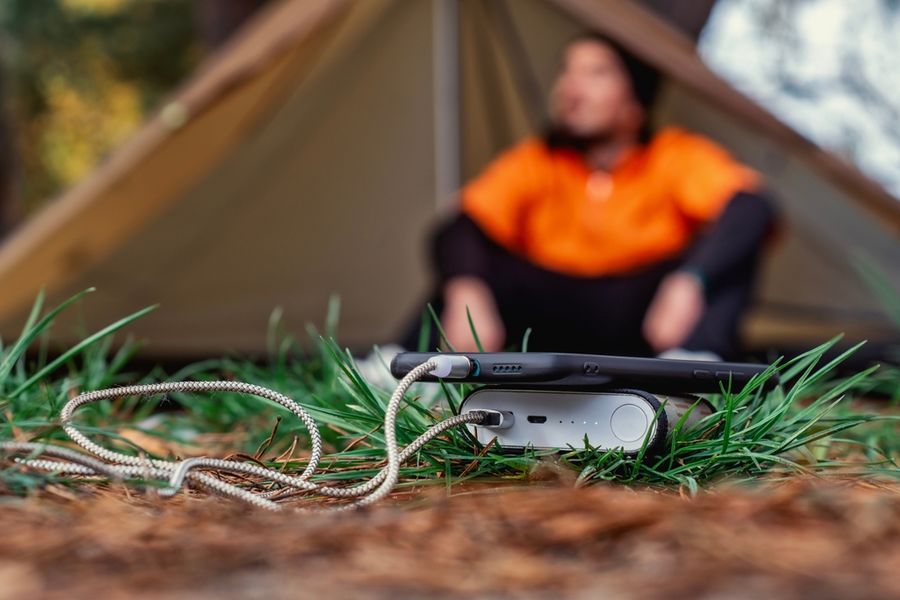
Not long ago, a portable power station was something most American households did not own and did not really need. That has changed. Between longer storms, more remote work, weekend trips, and a growing pile of devices that all need charging, a lithium battery in a box is starting to make real sense for everyday life. Understand common scenarios where power packs are quietly moving from a "nice to have" gadget into something most families treat as actually essential.
1) Long Power Outages at Home
Power outages used to feel like a quick interruption. In 2024, the average U.S. customer was without electricity for about 11 hours, nearly twice the yearly average in the previous decade (source). Major weather events such as Hurricanes Beryl, Helene, and Milton made up about 80% of all outage hours for the year. In South Carolina alone, the average customer was without service for nearly 53 hours (source).
Long outages create problems beyond the lights being off. A refrigerator only keeps food safe for about 4 hours once the power is gone, and a full freezer holds for roughly 48 hours (source). After that, perishable items like meat, fish, eggs, milk, and leftovers need to be thrown out. A portable power station can keep a fridge running, charge phones, and power a fan or a small medical device through a long outage, turning a forced wait into something more manageable.
2) Camping and Outdoor Trips
Outdoor trips have changed a lot in the last decade. Where once a flashlight and a paper map were enough, today's campers often bring phones with offline maps, GPS units, electric coolers, drones, and rechargeable lanterns. None of those things last forever on a single charge, and not every campsite has a power hookup.
A portable power station fills the gap between what camp gear can do and what an outlet would offer (source). It can top up phones for emergency calls, run a small fan inside a hot tent, keep camera batteries fresh, and even power a little electric grill. Many stations also pair with solar panels, so an extended trip does not have to end with a dead phone. For families who want comfort without giving up time outside, a power station has become a quiet camp essential.
3) Working from Home Without Stress
Remote work has not gone away. Early in 2024, about 34 million U.S. workers age 25 and older teleworked or worked at home for pay, which was up 5 million from a year earlier (source). That added up to 24.9% of all workers in that age group, with the share rising across every level of education (source). Among workers with an advanced degree, 43.6% teleworked, the highest of any group (source).
For all those people, an unexpected power flicker can mean a dropped meeting, a lost document, or a missed deadline. A portable power station can keep a laptop, modem, router, and second monitor running long enough to wrap up the call, save the work, and switch to a phone hotspot if needed. It is essentially the home office version of a small backup power supply, and easier to move around the house.
4) Tailgates, Events, and Backyard Gatherings
Big outdoor events have always needed power, but parking lots, parks, and backyards rarely come with enough outlets. A portable power station can run speakers, string lights, blenders, electric coolers, and warming trays for hours without the noise or fumes of a gas generator. That makes for cleaner air and easier conversation at any backyard party or game-day tailgate.
For people who host outdoor movie nights, the same battery can run a projector and a sound system at once. For block parties, it can keep lights glowing past sunset. Compared with long extension cords from a house or a fuel-powered generator, a portable power station is quieter, simpler, and safer for kids and pets.
5) Road Trips and Vehicle Emergencies
The American road trip is not going away, but the gear that comes along has changed. Families now travel with phones, tablets, kids' headphones, dash cams, and sometimes a small fridge in the trunk. A portable power station gives drivers a clean source of energy that does not drain the car battery overnight, which is especially helpful at rest stops, campgrounds, or in long lines of traffic.
In a roadside emergency, the same battery becomes a safety tool. It can light a dark shoulder, charge a phone for hours of calls, run a small electric pump for tire pressure, and power a fan or warm blanket while waiting for help. The peace of mind is a lot like keeping a spare tire — you may not need it often, but when you do, you really do.
Why the Power Station Quietly Made the Cut
Across every one of these scenes — long outages, camping, remote work, big gatherings, and road trips — a portable power station does the same simple job: it keeps important things running when the wall outlet is out of reach or out of service. Storms are lasting longer, remote work is sticking around, and the number of devices in a typical home is only growing.
A power station will not solve every problem, but it covers the gap between "no power" and "back to normal" with one quiet box anyone can use. For many U.S. households in 2026, that looks less like a gadget purchase and more like a basic part of everyday life.