
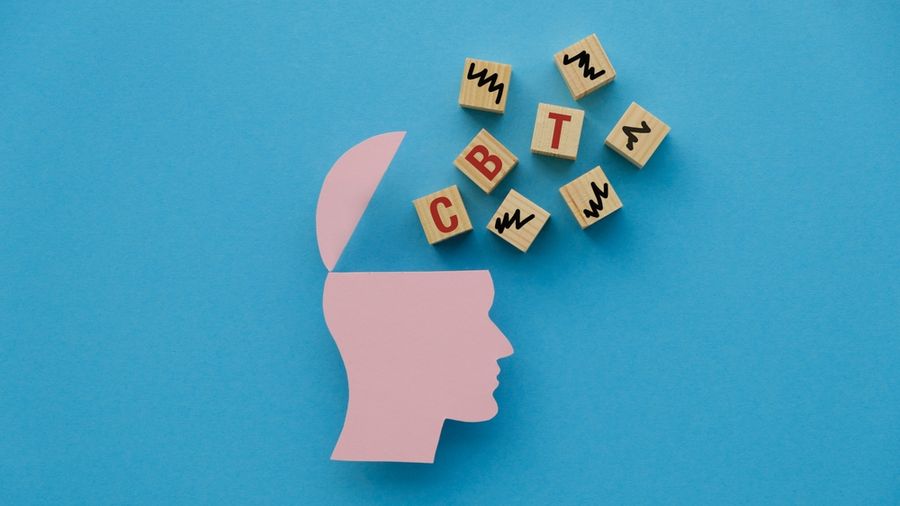
Anxiety has a way of making ordinary moments feel much bigger than they are. A tough conversation at work, a crowded store, or even a quiet moment alone can set off a wave of worry that feels hard to stop. Cognitive behavioral therapy, or CBT, offers tools that can help. Backed by decades of research, CBT techniques give people practical ways to change how they think, feel, and respond — without needing a therapist present every time.
1. Reframing Unhelpful Thoughts
One of the core ideas behind CBT is that your thoughts directly shape how you feel and what you do (source). When anxiety strikes, it often brings automatic thoughts that are harsh, overstated, or simply not accurate. A stumble at work becomes proof of failure. One awkward silence becomes a sign that everyone noticed. These kinds of patterns are very common — and they can be changed.
Cognitive restructuring, as this technique is called, involves noticing a negative thought and reshaping it into something more balanced (source). You might ask yourself whether the thought is based on fact or assumption, whether you are assuming the worst when other outcomes are just as possible, or what you would say to a friend who was thinking the same way. With regular practice, this process weakens the hold that anxious thinking has over your reactions and makes it easier to face stressful moments with a steadier mindset.
2. Writing Down What You're Thinking
Most anxious thoughts move fast. They come and go before you have a chance to examine them, which makes it easy to accept them as truth. Writing them down slows that process. A thought journal gives you a way to look at your own thinking with a little more distance (source).
A simple approach is to note the situation that triggered the anxiety, the thought that came with it, and how it made you feel. Then challenge what you wrote: Is this thought based on fact? What evidence supports or contradicts it (source)? What would a more balanced version look like? Doing this regularly helps you spot recurring patterns — the same fears surfacing, the same triggers appearing — which puts you in a much stronger position to address them before they spiral.
3. Facing What You've Been Avoiding
Staying away from things that make you anxious feels like relief in the short term. Over time, though, avoidance tends to strengthen anxiety rather than quiet it (source). Gradually exposing yourself to a feared situation in small, manageable steps teaches your brain that it can handle discomfort, and that outcomes are usually far less serious than feared.
The key is starting small (source). Someone anxious about social situations might begin with a brief text to a friend, then a short phone call, then a small gathering. At each step, the goal is not to feel no anxiety, but to stay with it long enough to see that nothing catastrophic happens. Because this technique can feel intense, it works best when guided by a trained therapist who can keep the steps safe and tailored to you.
4. Breathing and Relaxation Techniques
Anxiety does not stay in the mind — it moves into the body. A racing heart, tense muscles, and shallow breathing are all signals that the nervous system has shifted into high alert. Deep breathing is one of the most direct ways to begin calming that response (source). Deliberately slowing your breath can reduce physical symptoms like a rapid heartbeat and help make other coping strategies easier to use in the moment.
Progressive muscle relaxation is another CBT tool. It works by tensing and then releasing different muscle groups, helping the body recognize and let go of tension it has been carrying (source). Grounding exercises bring your focus back to the present moment through simple sensory awareness, which can interrupt racing thoughts before they build further (source). These approaches do not eliminate anxiety, but they make it easier to stay steady while other techniques do their work.
5. Testing Your Anxious Predictions
Much of everyday anxiety is built on predictions: that something embarrassing will happen, that you will say the wrong thing, that others will judge you. CBT uses behavioral experiments to test whether those predictions are actually accurate (source). Before doing something that triggers anxiety, you write down what you expect will happen. Afterward, you compare the prediction to what really occurred.
Oftentimes, the feared result does not appear — or it turns out to be far less severe than expected. Repeating this process across different situations gradually builds a body of real evidence that your anxious mind tends to overestimate risk. The more times a worry fails to come true, the harder it is for that worry to feel convincing the next time it shows up. This is a gradual process, but it is one grounded entirely in your own lived experience.
These Tools Work Best When You Use Them Regularly
Learning a CBT technique is a start. Making it a habit is what creates lasting change. CBT is designed so that the skills you build can stay with you long after any formal sessions have ended (source). That might mean spending a few minutes each morning writing down a worry, or pausing before a stressful moment to breathe.
None of these techniques requires a lot of time or perfection. What they require is consistency. The more often you practice them, the more natural they become — and the more your relationship with anxiety begins to shift from one where it calls the shots, to one where you have real options for how to respond.