

Most people check their heart rate without giving much thought to what happens between those beats. Yet the subtle timing variations within each heartbeat cycle carry a surprising amount of information about how the body is actually functioning — and recovering.
What Resting Heart Rate Variability Actually Measures
Heart rate variability, commonly referred to as HRV, is not simply a measure of how fast or slow the heart beats. Instead, it captures the tiny fluctuations in the amount of time that passes between individual heartbeats — differences measured in milliseconds that are completely invisible to human perception (source). A heart that beats with some degree of irregularity in its timing is actually performing as it should, while a heart that ticks along like a perfectly precise metronome may be a signal that something is off.
To put it in practical terms, the heart might beat every 1.2 seconds at one moment and every 0.8 seconds at the next (source). Those small shifts are what HRV tracks, and their presence reflects a well-functioning nervous system actively responding to the body's ever-changing demands.
The Nervous System Connection
HRV is fundamentally a window into the autonomic nervous system — the part of the nervous system that controls involuntary processes like breathing, digestion, and heart rhythm. Two branches of this system are constantly at work: the sympathetic side, which activates during stress or exertion, and the parasympathetic side, which promotes rest and recovery. HRV reflects the ongoing balance between these two forces (source).
When the body is under stress, the heart accelerates, which compresses the time between beats and reduces variability (source). Conversely, during restful, recovery-rich periods, the parasympathetic system takes the lead and the variability between beats increases. This is why resting HRV — particularly as measured during sleep — tends to provide the most accurate picture of the body's underlying state, since external factors like movement and mental activity are minimized during those hours (source).
What High and Low HRV Signal About Health
A higher HRV generally suggests the heart is rapidly and subtly adapting to signals from throughout the body, which is associated with stronger cardiovascular health (source). It also tends to correlate with better stress resilience, more efficient recovery from exercise, and a lower likelihood of overtraining.
Low HRV, on the other hand, points toward reduced adaptability. The Cleveland Clinic notes that low variability can be a sign of both current and future health concerns, as it suggests the body has less capacity to handle changing circumstances — and it is more commonly observed in individuals who already have elevated resting heart rates (source). Low HRV is also associated with an increased risk of cardiovascular disease over time (source).
It is worth noting that in some cases, HRV may technically qualify as a sinus arrhythmia — when the variability between beats exceeds 0.12 seconds — but this is typically a breathing-related phenomenon and is considered a normal part of how the heart and circulatory system function (source).
How Age and Other Factors Shape HRV Ranges
There is no single "normal" HRV that applies universally. Age plays a significant role: someone in their twenties might have a resting HRV in the range of 55 to 105 milliseconds, while a person in their sixties may see values between 25 and 45 milliseconds — a natural decline that reflects changes in autonomic function over time (source). Genetics, fitness level, medical history, and lifestyle choices all shape an individual's baseline as well (source).
Because of this variability between individuals, professional cardiovascular organizations have not issued universal target values for HRV. Experts instead recommend that each person track their own personal trend over time rather than compare their numbers directly to population averages (source). A meaningful drop from one's own established baseline is generally more informative than any single reading in isolation.
How HRV Is Measured
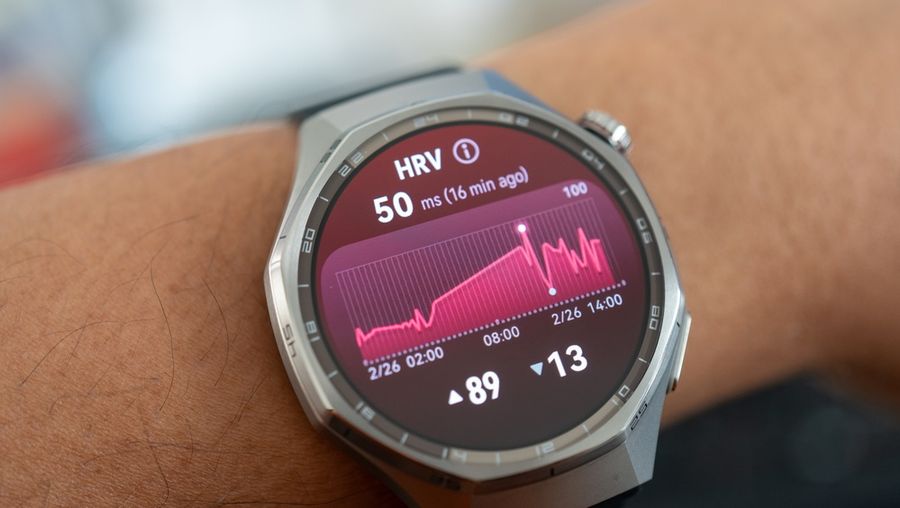
The most clinically precise method for capturing HRV is an electrocardiogram, or EKG, administered by a medical professional. However, many fitness trackers and smartwatches now measure HRV automatically during sleep, and these consumer-level readings are considered highly reliable for the purposes of ongoing personal monitoring (source). Because these devices capture data during rest, they tend to produce readings that are less influenced by the noise of daily activity.
Overnight measurement has become the standard approach for wearable devices precisely because it offers the clearest signal of the autonomic nervous system's baseline activity (source). For athletes and fitness-focused individuals, tracking this data over weeks or months can reveal patterns linked to recovery quality, sleep, and training load.
Ways to Influence HRV Over Time
HRV is not a fixed number. Consistent habits can meaningfully raise or lower it over time. Regular physical activity, a nutritious diet, and effective stress management are all associated with improved HRV (source). Addressing mental health factors such as anxiety and depression also contributes, as these conditions can suppress autonomic function. Biofeedback training — a practice that involves deliberate breathing techniques — has shown promise as a tool for improving both HRV and overall stress response (source).
Multiple days of reduced stress and adequate recovery tend to move baseline HRV upward over time, which is why sleep quality and workload management matter so much for people monitoring this metric (source). Short-term fluctuations are normal, but sustained trends in either direction are worth paying attention to.
Why Understanding Resting HRV Matters for Long-Term Health
Resting heart rate variability offers a rare look at how well the body's internal systems are communicating with one another. Rather than a simple number to optimize, HRV is best understood as a dynamic signal that shifts with lifestyle, stress, sleep, and physical conditioning. A person's own trend over time provides far more useful information than any single snapshot.
Knowing what HRV measures and what influences it puts individuals in a better position to make meaningful decisions about their health habits. Whether someone is an athlete monitoring recovery or simply someone interested in long-term cardiovascular wellness, understanding this metric adds depth to how health data can be interpreted and acted upon. Medical professionals and reliable health organizations continue to refine their understanding of HRV's role in overall well-being, making it a topic worth staying informed about.