

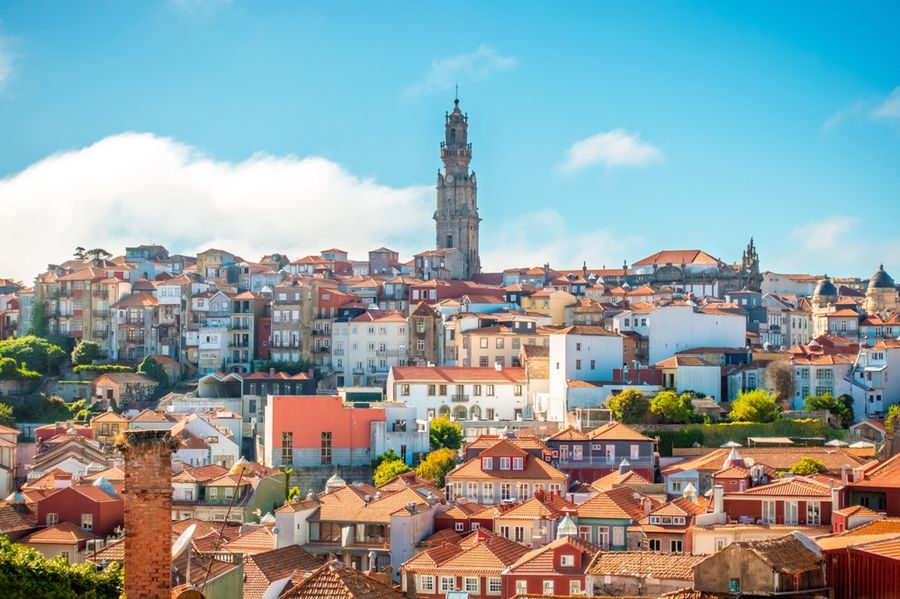
Travelers who skip the obvious capitals often discover something better waiting in the wings. Outside these metropolises, you'll find cities with real personality, shorter lines, and a genuine local pulse that the famous headline destinations struggle to match.
The Case for Going Off the Beaten Path
Every country has a city that plays second fiddle in the tourism conversation, yet frequently outperforms its more celebrated counterpart when it comes to atmosphere, affordability, and authentic experience. These so-called "second cities" are not consolation prizes — they are destinations that have quietly developed their own distinct identities, often while their famous neighbors absorbed the tourist masses.
The concept is straightforward: a second city is not necessarily the largest or most internationally recognized urban center in a country, but it delivers a travel experience that rivals — and sometimes surpasses — what the headline destination offers (source). For American travelers looking beyond the expected, these cities reward curiosity in ways that the overcrowded classics rarely can.
Porto: The Portuguese Alternative That Earns Its Reputation
Lisbon has long attracted international attention, but Porto sits just north with a compelling argument of its own. The city is less crowded, more budget-friendly, and carries a slightly under-the-radar quality that many independent travelers find refreshing (source). Its layered culture, distinctive architecture, and proximity to the Douro Valley wine country make it a destination worth prioritizing over the Portuguese capital for visitors seeking depth over hype.
Porto's appeal is hard to reduce to a single selling point. Cobblestone neighborhoods tumble down toward the river, azulejo-tiled facades catch afternoon light, and the city's food scene holds its own against any European rival. Travelers who dedicate time here tend to find that Lisbon, for all its charm, feels comparatively sanitized.
Marseille: France's Gritty, Sun-Drenched Underdog
Paris dominates nearly every conversation about French travel, but France's second-largest city tells a very different story. Marseille brings a Mediterranean working-harbor energy to the table — cafés, museums, historical buildings, and a coastal character that Paris cannot replicate, all at a considerably lower cost (source). The city's port heritage and multicultural fabric give it a rawness that visitors either fall in love with immediately or discover slowly over time.
For American travelers accustomed to treating France as synonymous with Paris, Marseille offers a genuine recalibration. The food alone — bouillabaisse, fresh seafood markets, North African-influenced street food — represents a culinary tradition entirely separate from the Parisian bistro circuit. The coastline stretching toward the Calanques natural park adds a dimension of outdoor beauty that no arrondissement can compete with.
Chicago and San Antonio: American Second Cities With First-Rate Appeal
The concept translates powerfully within the United States as well. Chicago has carried the "Second City" nickname for generations, and its skyline along Lake Michigan, rich network of diverse neighborhoods, world-class institutions like the Shedd Aquarium and the Chicago Art Institute, and its famous architectural boat tours along the Chicago River make it a destination that competes with any American city on merit (source).
San Antonio offers a different kind of domestic second-city story. While Austin draws the cultural spotlight in Texas, San Antonio's River Walk anchors an urban experience with genuine historical weight. The city is home to the Alamo, which holds the distinction of being the only UNESCO World Heritage site in Texas, giving it historical significance that few American cities can match (source). Visitors who arrive expecting a quieter version of Austin often leave with the sense that San Antonio had the more memorable identity all along.
Osaka, Rotterdam, and the Global Pattern
The second-city phenomenon plays out consistently across continents. Osaka has placed near the top of global liveability rankings and earned recognition as Japan's culinary capital, drawing food-focused travelers to its traditional markets, impressive castle, and dramatic urban skyline — a counterpoint to Tokyo's overwhelming scale (source). Rotterdam, meanwhile, rebuilt itself after near-total wartime destruction into a showcase of bold contemporary architecture and now operates the largest working port in Europe, projecting a cosmopolitan energy that feels entirely unlike the picture-postcard image most associate with the Netherlands (source).
Germany offers its own compelling example in Leipzig, a city that has drawn artists and creative professionals priced out of Berlin, building a vibrant club culture, gallery scene, and musical legacy that positions it as a genuine cultural capital in its own right (source). Closer to home, Guadalajara in Mexico stands as the birthplace of mariachi music, offering travelers an affordable and culturally rich stop where the cathedral, famous painted murals, and the nearby town of Tequila create an itinerary that Mexico City, for all its grandeur, simply cannot replicate (source).
What Makes Second Cities Worth Choosing
The pattern across all these destinations points to something consistent: second cities tend to preserve authenticity longer because the tourist economy hasn't yet smoothed away the rough edges that make a place interesting. Locals remain present in neighborhood life, prices reflect reality rather than visitor demand, and the cultural institutions — markets, music venues, galleries, restaurants — serve the people who actually live there.
For American travelers weighing their next international or domestic trip, the second-city approach represents a practical and rewarding shift in thinking. The question worth asking is not simply which city is most famous, but which city is most alive.
Time To Plan Your Next Trip
Second cities reward travelers who prioritize experience over status. Porto and Marseille offer European depth at a fraction of the capital-city cost. Osaka and Rotterdam redefine what their respective countries have to offer beyond the obvious. Chicago and San Antonio prove the same principle holds at home. Each of these destinations carries a distinct identity that has developed independently of the tourist spotlight — which is precisely what makes them worth exploring. For any traveler ready to look past the headline destinations, the second city is often where the real trip begins.