

A quiet weekend feels easier when it does not include rental counters, parking fees, or traffic jams. Several U.S. cities have compact historic centers where hotels, restaurants, parks, and major sights sit close together. Good transit can cover the remaining distance. The best destinations appeal to travelers who prefer slow walks, short rides, waterfront views, and unhurried meals rather than a packed schedule built around driving.
Savannah, Georgia
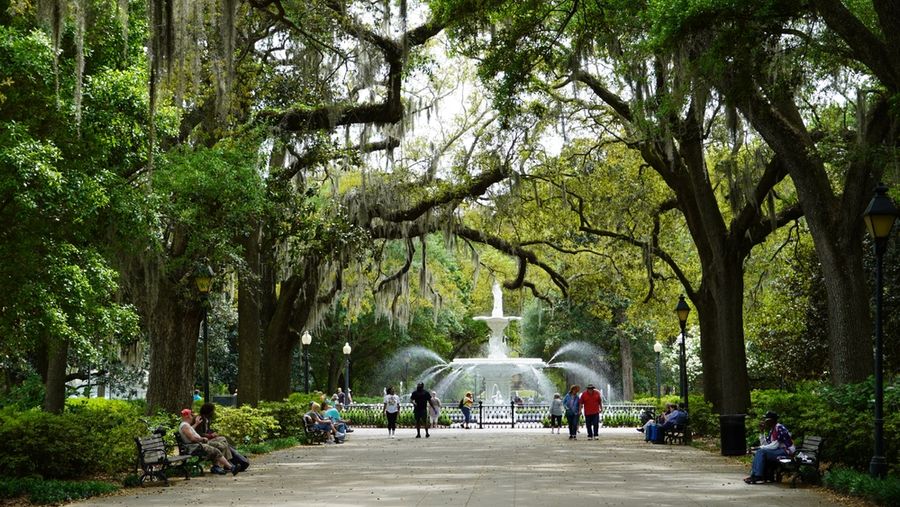
Savannah’s Historic District is one of the easiest places in the country to explore at a relaxed pace. Its street plan is broken up by 23 public squares, creating frequent places to sit beneath trees, admire historic buildings, or change direction without following a strict route. Forsyth Park, the riverfront, museums, restaurants, and many hotels are all concentrated within the same central area.
Travelers arriving by plane can take a taxi or ride service from Savannah/Hilton Head International Airport and remain downtown for the rest of the weekend. The no-fare dot system operates downtown loops, while the Savannah Belles Ferry carries passengers across the river without a fare. These services are useful when the weather is hot or a full day of walking begins to feel tiring.
Top Pedestrian-Friendly Area: The Historic District
Stay between Forsyth Park and the Savannah River for the simplest car-free visit. Bull Street offers a natural walking route through several squares, while River Street adds shops, galleries, dining, and views of passing ships. Visitors seeking a quieter experience can explore the residential streets early in the morning, then return to the busier riverfront later in the day.
Portland, Maine
Portland offers a compact coastal getaway with enough variety for a full weekend. The Old Port combines cobblestone streets, brick buildings, restaurants, galleries, shops, and a working waterfront. The nearby Arts District, East End, and waterfront trails extend the walking options without making the city feel too large to manage.
The city can be reached by air, intercity bus, or Amtrak’s Downeaster service. Local METRO buses connect the Portland Transportation Center with downtown and other neighborhoods. From the Old Port, travelers can also board Casco Bay Lines ferries for a short island outing without renting a car. The ferry terminal is positioned directly along the downtown waterfront.
Top Pedestrian-Friendly Area: The Old Port
The Old Port is the best base for a short trip because meals, waterfront walks, shops, and ferry service are close together. Exchange Street and the surrounding blocks offer easy browsing, while Commercial Street follows the harbor. Travelers can also walk toward the Eastern Promenade for open water views and a calmer setting away from the busiest shopping blocks.
Alexandria, Virginia
Old Town Alexandria delivers a small-city atmosphere while remaining connected to the larger Washington, D.C., transit system. Red-brick sidewalks, historic buildings, independent shops, museums, and the Potomac waterfront make it well suited to a two-night stay. Its main visitor area is compact enough to explore without building every day around a bus schedule.
The King Street–Old Town Metro station is served by the Blue and Yellow lines and sits beside Alexandria’s Amtrak station. A no-fee trolley runs along King Street toward the waterfront, allowing visitors to walk downhill through Old Town and ride back when needed. Local buses and regional transit provide additional options for trips beyond the historic center.
Top Pedestrian-Friendly Area: King Street and the Waterfront
King Street forms the main spine of Old Town. Restaurants, coffee shops, boutiques, Market Square, and side streets filled with historic homes stretch from the Metro area toward the river. The waterfront end has pedestrian-focused blocks, parks, public art, and the Torpedo Factory Art Center. Travelers who want less activity can wander the parallel residential streets before returning to King Street for dinner.
Charleston, South Carolina
Charleston’s historic peninsula works well for travelers who want architecture, gardens, food, and waterfront walks in one central district. Many of the best-known streets and public spaces are south of Calhoun Street, making it possible to plan a weekend around short walks rather than long cross-city trips. The flat ground is another advantage, although uneven sidewalks and warm weather can slow the pace.
Visitors can use taxis or ride services to reach the peninsula from Charleston International Airport. Once downtown, the no-fare DASH routes connect major parts of the central area, including King Street, Meeting Street, the aquarium area, and the visitor center. Regular CARTA routes are useful for longer local trips, but a traveler staying in the historic core may need them only occasionally.
Top Pedestrian-Friendly Area: South of Broad
South of Broad is the strongest choice for a quiet walk. The area includes historic homes, shaded side streets, small gardens, and views near the Battery and White Point Garden. Nearby East Bay Street leads toward Rainbow Row and the waterfront. King Street is better for shopping and restaurants, but it becomes busier, so travelers seeking calm may prefer to visit it in the morning.
Key West, Florida
Key West is compact enough that a visitor can fly into the local airport, reach Old Town, and avoid driving for the remainder of the trip. The island is about four miles long and roughly one to two miles wide, while many of its museums, historic homes, restaurants, galleries, and waterfront sights are concentrated in the western section. Walking and biking are common ways to move around.
The Old Town street grid makes it possible to move between the Atlantic side, the Gulf waterfront, and central attractions without covering great distances. Travelers should still consider the heat, humidity, and strength of the sun. A slow schedule with morning walks, afternoon breaks, and evening waterfront time is often more comfortable than trying to cross the island several times in one day.
Top Pedestrian-Friendly Area: Old Town
Old Town places Mallory Square, Duval Street, the Historic Seaport, the Truman Little White House, and the Hemingway Home within a manageable area. Duval Street is the busiest corridor, so it may not suit every idea of a quiet retreat. For a calmer walk, use Caroline Street, Whitehead Street, or the residential lanes between the major attractions, then return to the waterfront for sunset.
How to Plan a Car-Free Weekend
Choose a hotel based on walking distance rather than the lowest room rate. A property near the historic center may reduce the need for rides, shorten the return trip after dinner, and make it easier to rest between activities. Check the route to the hotel on a map and look for hills, large roads, bridges, or gaps in the sidewalk before booking.
Plan around one main neighborhood each day. Trying to cross a city repeatedly can turn a quiet trip into a transit exercise. A better schedule might include a morning walk, one museum or historic site, a long lunch, and an afternoon park or waterfront route. Leave room for stops that were not part of the original plan.
Weather matters more on a walking trip. Southern cities can be hot and humid, while Portland can be cold, wet, or windy outside summer. Pack supportive shoes, a light rain layer, sun protection, and a small water bottle. Travelers with limited mobility should also check sidewalk conditions, curb cuts, hotel entrances, and transit accessibility.
Download an offline map before leaving home and save the hotel, station, airport, restaurants, and key attractions. Transit schedules and service routes can change, so confirm them shortly before departure. A ride service can still serve as a backup even when the main goal is to complete the weekend without a personal vehicle.
Choosing the Right Quiet Escape
Savannah is the best fit for shaded squares and Southern history, while Portland offers a compact waterfront with easy ferry access. Alexandria combines a peaceful historic setting with excellent regional connections, and Charleston rewards travelers who enjoy architecture and long, slow walks. Key West provides a warmer escape where most major sights sit within a small island district.
A successful car-free weekend depends less on choosing the largest transit system and more on choosing the right neighborhood. Stay near the places that matter most, limit the number of cross-city trips, and allow time to walk without rushing. When the hotel, meals, parks, and sights all fit within a compact area, leaving the car behind becomes part of the getaway rather than a sacrifice.