

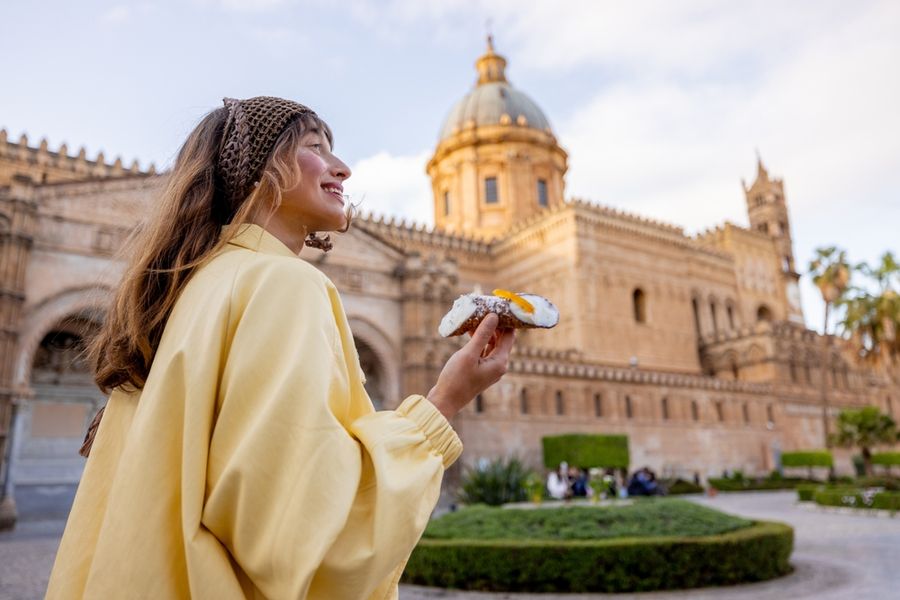
Rushing through five countries in ten days might sound exciting on paper, but seasoned travelers are increasingly discovering that spending an entire month in a single city offers something no whirlwind itinerary ever could — genuine connection, lower stress, and a far richer experience overall.
The Case Against the Multi-Country Sprint
There is a certain allure to stacking destinations on a travel itinerary. Rome on Monday, Paris on Wednesday, Amsterdam by the weekend. For many American travelers, the limited vacation time available each year creates pressure to see as much as possible before the flight home. But that approach carries a hidden cost. The constant movement — repacking bags, navigating unfamiliar transit systems, adjusting to new neighborhoods — accumulates into a kind of fatigue that defeats the original purpose of taking a break. It is actually quite common to return from a trip more exhausted than before departure, something that slow travel directly addresses by removing the relentless pressure to move on (source).
Beyond personal exhaustion, rapid multi-destination travel carries a measurable environmental toll. Hopping between cities via frequent short-haul flights generates significantly higher per-trip carbon emissions compared to staying in a single location for an extended period (source). Every additional transit leg — whether by plane, train, or rental car — adds to that footprint. The environmental math becomes difficult to ignore when a traveler stops and considers the cumulative effect of five or six separate journeys crammed into a single vacation.
What Slow Travel Actually Looks Like
Slow travel centers on a straightforward principle: trading quantity for quality, and trusting that doing less can actually mean experiencing more (source). In practical terms, that means choosing one city — whether it is Lisbon, Oaxaca, or Kyoto — and committing to it for weeks rather than days. Instead of spending three hours at a famous landmark and moving on, a traveler staying for a month has the luxury of returning to the same neighborhood market every Saturday, learning the barista's name at the corner café, or stumbling across a tucked-away bookstore that no travel app would ever surface.
The logistics of daily life become part of the adventure rather than obstacles to overcome. Finding the best local grocery store, mapping out a morning running route through a residential district, or cooking a meal with ingredients bought from a street vendor — these small, ordinary moments are precisely what deepens a traveler's relationship with a place. Tourists moving at sprint pace rarely access these layers because the schedule simply does not permit it.
The Financial and Environmental Upside
One of the most counterintuitive aspects of slow travel is that it can actually cost less than rapid multi-city tourism. Booking a single long-term rental apartment for a month is often considerably more affordable on a per-night basis than reserving a string of hotels across five different countries. Eliminating multiple flights, train tickets, and car rentals removes substantial expense from the total budget. Eating and shopping at local markets rather than tourist-facing restaurants and gift shops further reduces daily spending.
The sustainability benefits extend beyond the traveler's wallet. When accommodations experience fewer guest turnovers, they consume less water and use fewer resources laundering towels, linens, and cleaning rooms between stays (source). Academic research supports this broader environmental picture, noting that travelers who remain in a single destination for extended periods tend to integrate more organically with local economies and depend far less on the high-carbon tourist infrastructure that rapid itineraries typically require (source). As environmental awareness continues to rise, this kind of mindful travel is increasingly viewed not as a niche preference but as a meaningful behavioral shift with real consequences for global carbon output.
Deeper Cultural Connection as the Real Reward
Perhaps the most compelling argument for spending a month in one city is what it does for cultural understanding. A traveler racing through multiple countries accumulates a series of impressions — photographs, menu items, museum selfies. A traveler who stays long enough to settle into a neighborhood rhythm collects something harder to replicate: genuine familiarity with a place and its people.
Language barriers soften over time. A few weeks of daily exposure to a local tongue, even without formal study, tends to yield conversational basics that open doors no tourist phrase book can. Local residents begin to recognize a slow traveler as something other than a passing visitor. Friendships form. Invitations to family dinners, neighborhood festivals, or informal walking tours emerge organically from these repeated encounters. None of that happens when checkout is scheduled for Thursday.
Peer-reviewed research into sustainable tourism reinforces this point, observing that longer stays encourage travelers to weave themselves into local economic and social fabric rather than skimming across the surface of a destination (source). The result is a form of travel that benefits both the visitor and the community being visited.
Why Slow Travel Suits the American Traveler
For travelers based in the United States, where paid vacation time is often shorter than in many other countries, the idea of spending an entire month in one place can feel like an impossible luxury. Yet the slow travel philosophy does not necessarily demand a month-long sabbatical to deliver its benefits. Even extending a ten-day trip to focus on a single city rather than three or four produces a noticeably different experience. The principle scales to whatever time is available.
Remote work has also reshaped what extended travel looks like for many Americans. A growing number of professionals now have the flexibility to work from anywhere with a reliable internet connection, making a month in one city not only feasible but practically straightforward. The slow travel approach aligns naturally with this lifestyle — one base, one set of keys, one neighborhood to call home for a while.
Why You Should Learn More About Slow Travel Today
Slow travel represents a fundamentally different relationship with the world beyond home — one built on presence rather than pace. The evidence, both scientific and experiential, consistently points to the same conclusion: travelers who slow down return home with richer memories, lower stress levels, and a lighter environmental footprint than those who sprint across a map. Research into sustainable tourism models suggests that this style of travel is not merely a personal preference but part of a broader, necessary shift in how people move through the world (source). For anyone curious about what travel can become when the itinerary stops running the show, exploring the principles of slow travel further is a worthwhile investment of time and curiosity.