

Some food markets are destinations in their own right—places where history, culture, and extraordinary eating converge into an experience no restaurant can replicate. From centuries-old European halls to bustling American institutions, these are the markets worth building an entire trip around.
When a Market Becomes the Main Event
Most travelers treat food markets as a pleasant detour—a quick stop between monuments or museums. But certain markets demand more time, more appetite, and a deliberate choice to make them the centerpiece of a visit. These aren't just places to grab a snack; they are living, breathing cultural institutions where vendors, farmers, and artisans have been gathering for generations. Planning a trip around one of these destinations means slowing down enough to actually absorb what makes each place irreplaceable.
The world's most celebrated markets share a few things in common: deep historical roots, an extraordinary variety of food, and a loyal community of both locals and visitors who return again and again. Understanding what sets each one apart helps travelers decide which deserves a spot at the top of their itinerary.
Pike Place Market, Seattle
Few American markets carry the kind of legacy that Pike Place does. Founded in 1907 and sprawling across nine acres of historic downtown Seattle, the market is home to more than 500 small businesses and draws upward of 10 million visitors annually, earning its place among the most-visited tourist attractions in the world (source). That popularity isn't just tourist novelty—Pike Place has been intentional about investing in its surrounding community, supporting local farmers and food producers while providing services and affordable housing to lower-income families (source).
Visitors who spend a full day here find themselves moving between fishmongers, fresh flower stalls, specialty cheese vendors, and small restaurants tucked into the market's lower levels. The sheer density of independent operators makes every visit feel different, and the views over Elliott Bay add a scenic backdrop that's hard to beat anywhere in the Pacific Northwest.
La Boqueria, Barcelona
Barcelona's La Boqueria has been drawing crowds since its origins as a traveling market in 1217, and today it houses over 200 stalls packed into a vast covered space (source). Fresh seafood, jamón ibérico, tropical fruits, spices, and freshly squeezed juices share space with vendors selling everything from artisanal cheeses to handmade chocolates. Colorful stalls line the interior, and the energy inside is relentless from the moment the doors open (source).
A trip to La Boqueria rewards those who arrive early and stay late. Mornings bring the freshest produce and the most elbow room, while afternoons reveal the social rhythm of Barcelona's food culture—vendors chatting with regulars, chefs sourcing ingredients for evening service, and travelers sitting at tiny counters eating grilled seafood with a glass of local wine. No quick pass-through does it justice.
Reading Terminal Market, Philadelphia
Since 1893, Reading Terminal Market has stood as one of the country's most respected public markets, and today it remains Philadelphia's top tourist attraction after the Liberty Bell and Independence Hall (source). With more than 80 merchants operating under one roof, the market offers a remarkable cross-section of Philadelphia's food identity—from Pennsylvania Dutch baked goods and Amish prepared foods to local cheesemakers, butchers, and craft beer vendors.
What makes Reading Terminal worth dedicating a full day to is how much it functions as a genuine community space rather than a curated tourist attraction. Regulars shop here for weekly groceries, office workers line up for lunch, and out-of-towners find themselves unexpectedly lingering for hours. The mix of old-school vendors and newer culinary voices gives the market a layered character that reveals itself the longer one stays.
Chandni Chowk, Old Delhi
Few markets anywhere in the world reward patience and curiosity the way Chandni Chowk does. Tracing its origins to the 17th century, this Old Delhi institution is consistently described by dedicated food travelers as a place that deserves an entire day of exploration (source). The range of food available within its labyrinthine lanes is staggering—regional specialties like daulat ki chaat, chole kulche, deep-fried parathas, kebabs, and jalebis each have their own legendary vendors hidden within the market's sprawl.
Navigating Chandni Chowk is part of the experience. There is no efficient route, no tidy layout designed for visitors to tick off sights in order. Instead, getting lost in its alleys, following a smell or a crowd, and stumbling upon something unexpected is exactly the kind of travel that stays with a person long after the trip ends.
French Market, New Orleans
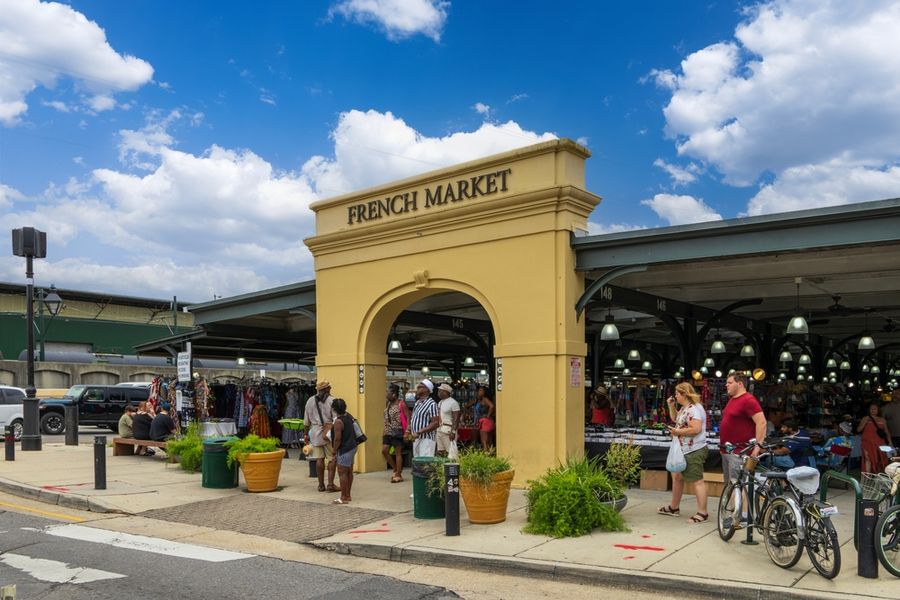
New Orleans has always known how to feed people well, and the French Market has been at the center of that tradition for roughly 200 years (source). Cajun and Creole dishes anchor the culinary offerings—jambalaya, étouffée, and the legendary Muffuletta sandwich all have their place here. And no visit to the French Market is complete without stopping at Café Du Monde, which has been serving café au lait and beignets since 1862 (source).
Beyond the food, the French Market sits within one of the most culturally rich neighborhoods in the United States. The market spills into the broader atmosphere of the French Quarter, making it easy to extend a visit into an afternoon of exploring nearby jazz clubs, historic architecture, and the particular sensory experience that defines New Orleans as a destination.
Smorgasburg and Queens Night Market, New York
New York City offers two very different but equally compelling market experiences. Smorgasburg, which launched in Brooklyn in 2011, has expanded into what The New York Times dubbed "the Woodstock of Eating," now operating across multiple American cities including Los Angeles, Miami, and Atlanta (source). The open-air format and rotating roster of independent food vendors make each visit a showcase of culinary creativity, from inventive takes on global cuisine to entirely new food concepts.
The Queens Night Market operates on a different philosophy but is equally worth a dedicated visit. Running for six months out of the year around Flushing Meadows-Corona Park, the market represents dishes from more than 95 countries, nearly all served by small independent vendors at prices most shoppers won't believe (source). Together, these two New York markets illustrate how a single city can support vastly different food market cultures—both thriving, both irreplaceable.
Why Food Markets Are Worth Your Full Attention
Great food markets are more than places to eat—they are archives of a place's identity, economy, and community spirit. Borough Market in London can trace its roots back 1,000 years, having evolved from a wholesale trading post into one of the most vibrant food destinations in Europe (source). Grand Central Market in Los Angeles, which opened in 1917, carries on a similar tradition by celebrating the immigrant communities that shaped the city through 40 stalls of diverse, culturally rooted cuisine (source).
Travelers who dedicate real time to these markets come away with a richer understanding of a city than any monument or museum could provide. The best markets aren't tourist traps dressed up with fresh produce—they are places where real life happens, food is taken seriously, and a few hours of eating reveals more about a culture than days spent elsewhere. That's precisely what makes them worth planning an entire trip around.
Why Food Markets Are Worth Exploring Further
The markets covered here—spanning centuries of history, multiple continents, and an enormous range of culinary traditions—share one essential quality: they are all best experienced slowly, with an open schedule and a genuine appetite. Whether it's the pre-dawn tuna auctions at Tokyo's Tsukiji Fish Market (source), the layered street food lanes of Old Delhi, or the immigrant-driven stalls of Queens, these destinations reward travelers who treat eating as a form of cultural discovery. Food markets are living institutions, and the time invested in visiting them properly—not as a quick stop, but as the heart of a trip—returns dividends that last far beyond the meal itself.