

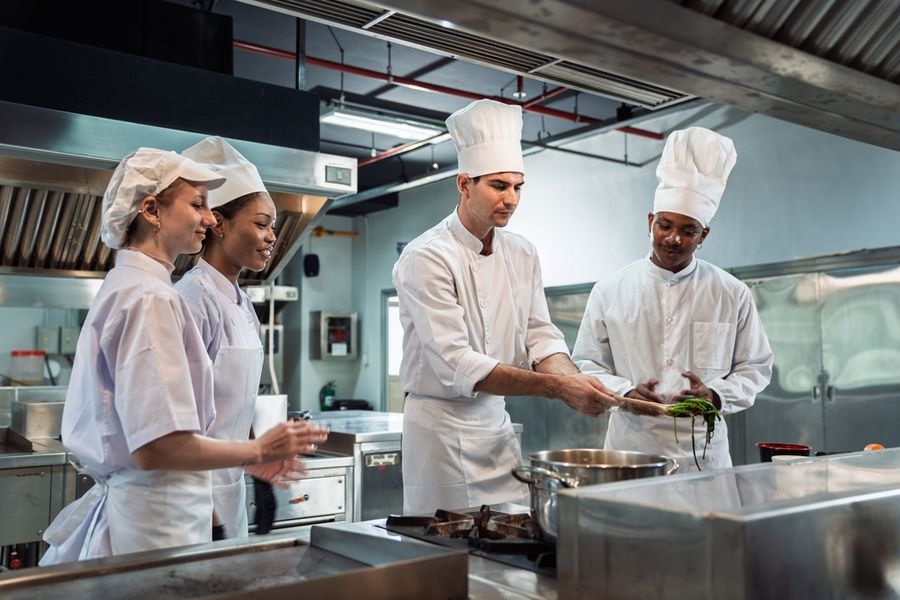
There is no substitute for learning a dish in the place where it was created. Culinary apprenticeships abroad place aspiring chefs inside the kitchens, markets, and traditions that shaped the world's most celebrated cuisines — turning travel into professional transformation.
Why Location Changes Everything in Culinary Training
Food is inseparable from the culture that produced it. The way a French sauce is built, the patience behind Japanese knife work, or the layering of spices in a Spanish kitchen cannot be fully appreciated from a textbook or a classroom far from its origin. When a chef-in-training steps into a professional kitchen in the very country where a dish was born, the learning that takes place is multidimensional — sensory, historical, and technical all at once.
Studying or interning abroad broadens a cook's perspective in ways that a domestic education rarely can. Exposure to regional ingredients, unfamiliar techniques, and deeply rooted food traditions forces students to adapt, problem-solve, and grow. As one culinary institution puts it, international training "expands your repertoire, introduces you to regional ingredients and traditions, and challenges you to step outside your comfort zone" (source). That kind of challenge is precisely what turns a competent student into a confident professional.
France: The Benchmark for Classical Technique
For generations, France has held a near-mythic status in the culinary world. Its emphasis on foundational technique, respect for quality ingredients, and centuries-long tradition of codified cooking methods make it the destination most associated with formal culinary education. France is "widely regarded as the birthplace of modern culinary arts," with a gastronomic culture built on precision and deep reverence for the craft (source).
An apprenticeship in a French kitchen offers something beyond recipes — it offers an entire philosophy of cooking. Interns placed in fine dining restaurants across the country work directly alongside local chefs, contributing to real service while absorbing how the French approach the relationship between time, temperature, and flavor. The opportunity to source ingredients at a regional market, then transform them in a professional kitchen later that afternoon, is a lesson no classroom can replicate.
Japan: Precision, Discipline, and the Art of Restraint
Japan offers an entirely different but equally powerful apprenticeship experience. The country's culinary philosophy centers on discipline and an almost meditative attention to detail. From the geometry of a knife cut to the visual composition of a finished plate, Japanese cooking treats every element as deliberate. "Precision and discipline are central to Japanese cooking, from knife skills to plating, with techniques taught with deep respect for tradition, seasonality and the integrity of each ingredient" (source).
For a culinary student serious about elevating their technical standards, time spent in a Japanese kitchen — whether in Tokyo, Kyoto, or Osaka — instills habits of mindfulness that carry over into any style of cooking. The Culinary Institute of America, for example, sends students to Japan as part of structured concentration programs, where they explore authentic regional ingredient suppliers and restaurants to understand how culture directly shapes what ends up on the plate (source).
Spain, Italy, Thailand, and Beyond: A World of Culinary Apprenticeships
The range of available destinations for culinary apprenticeships continues to grow. Programs now place students and interns in professional kitchens across Spain, Italy, Thailand, Argentina, Costa Rica, Ireland, and the Czech Republic, with flexible durations that range from one to six months depending on the destination (source). Each country offers a distinct culinary identity — from the bold, herb-forward flavors of Southeast Asia to the slow, ingredient-led cooking of the Italian countryside.
In these kitchens, interns rarely stand on the sidelines. Most work directly with local professionals, contributing to food preparation, breaking down produce, and supporting the preparation of soups, sauces, and appetizers during real service (source). That active participation is what distinguishes an apprenticeship from a cooking tour — the work is real, the stakes are real, and the skills acquired are built through repetition in a professional environment.
What Culinary Apprenticeships Abroad Do for a Career
Beyond the practical skills gained, an international culinary apprenticeship carries significant professional weight. Employers in the food and hospitality industries recognize that a candidate who has trained in a foreign kitchen has demonstrated more than technical ability — they have shown adaptability, initiative, and the willingness to pursue mastery on its own terms. International experience signals a genuine commitment to the craft and a readiness for the demands a high-level kitchen places on its team (source).
Training at or alongside world-renowned institutions in culinary capitals like Paris or Tokyo adds measurable credibility to a professional portfolio (source). The résumé line is valuable, but the deeper benefit is the professional identity that forms through immersive experience — the ability to speak with authority about a cuisine because one has lived and worked inside it. That kind of authenticity resonates across the industry, from fine dining to food media to culinary education itself.
CIA study abroad concentrations, for instance, go far beyond kitchen technique, offering students lessons in menu development, food and beverage pairing, sustainable agriculture, and the broader impact of culture on how food is produced and consumed (source). Those broader competencies make graduates more versatile, more thoughtful, and better equipped to lead in whatever culinary direction they choose to pursue.
Why You Should Learn More About Culinary Apprenticeships Abroad Today
Culinary apprenticeships abroad represent one of the most direct paths toward mastering a cuisine on its own terms. Whether it is the classical rigor of a French kitchen, the meditative precision of Japanese cookery, or the vibrant boldness of Southeast Asian flavors, every destination offers a form of professional development that is impossible to replicate at a distance. The combination of hands-on kitchen experience, cultural immersion, and institutional prestige creates a foundation that serves a culinary career for decades. For any aspiring chef who is serious about their craft, spending time in a kitchen where a beloved dish was actually born is not a luxury — it is one of the most meaningful investments they can make in their future.